

The Bregman exchange is just one example, though; the point applies to any kind of leader: public intellectuals, managers, politicians, or activists.
More in detail, in this post, I will argue that:
- Some people have the wrong understanding of what whataboutery means, and in misusing the word, they are having precisely the effect they are trying to prevent.
- For a leader, being imperfect is an asset, not a liability.
- Idealising our leaders - while understandable - is counterproductive on many levels.
- As followers, we owe it to ourselves and to our leaders to actively deconstruct the polished image they project and replace it with one where imperfection and vulnerability take centre stage.
Towards the end of the article, I will also suggest some heuristics that leaders and followers can use to reap the benefits of embracing imperfection and vulnerability.
Context#
To understand my upcoming point on whataboutery, some context about the LinkedIn post mentioned above is needed.
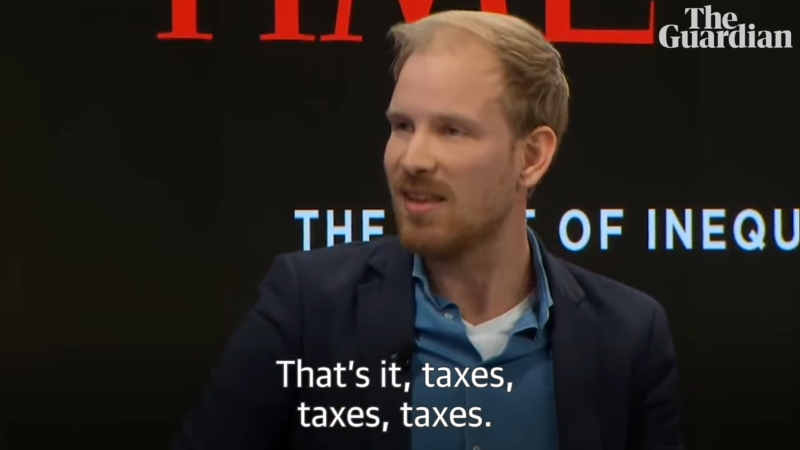
Rutger Bregman is a Dutch writer1 who became widely known after telling billionaires on the Davos stage that their “stupid philanthropy schemes” were “bullshit” and that they should pay their fair share of taxes.
In the LinkedIn post that prompted my decision to write, Bregman called for the boycotting of OpenAI, on the basis of their disregard for the public good, their lobbying against any kind of regulation on AI, their support of Trump and their cooperation with the Immigration and Customs Enforcement (ICE) agency in the United States2.
The call to boycott OpenAI resonated with me (I despise OpenAI for multiple reasons myself), but I also found Bregman’s position inconsistent with his being close to - and often defending - Bill Gates, who had a prominent role in shaping the direction of OpenAI3.
Thus, I stated as much, and a minority of commenters - without engaging the inconsistency - accused me of whataboutery.
On Whataboutery#
So, let’s start here.
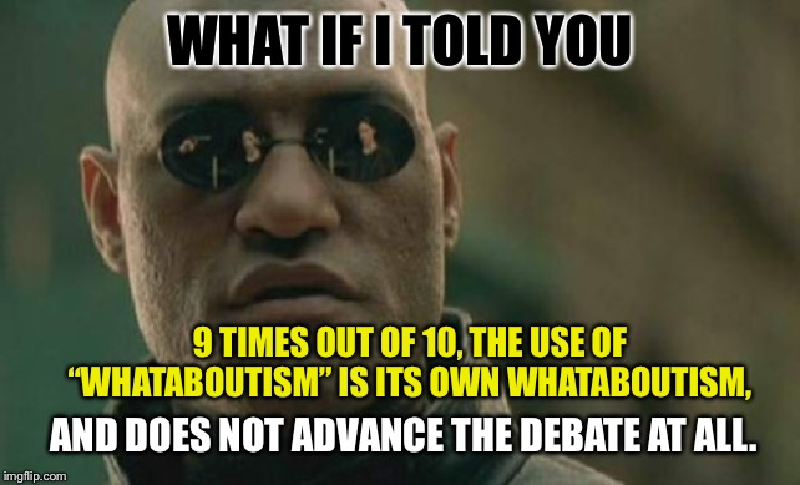
My first claim is that people routinely misunderstand what whataboutery is, and in misusing the word, they are having precisely the effect they are trying to prevent in the conversation.
Whataboutery (or whataboutism) is the practice of “responding to an accusation with a counter-accusation instead of offering an explanation or defence against the original accusation.” (Wikipedia)
But I was not trying to defend OpenAI. On the contrary: I very openly embraced the position of Bregman on it, thus the accusation of whataboutery seems misplaced.
The real irony, though, is that the accusation of whataboutery in itself is an act of whataboutery, as it tries to distract the reader from Bregman’s inconsistencies, moving the focus on my intentions instead.
I don’t think people meant it in bad faith. Whataboutery is an informal fallacy4, and the accusation felt like a reflexive shortcut rather than a reasoned rebuttal.
But this only makes things more interesting: why did people move so quickly to suppress the critique of Bregman?
On imperfection#

I think it’s because many struggle to see good leadership and fallibility as compatible.
In the West, people often treat leaders they admire as templates to copy–not just inspiration, but blueprints to replicate.
There are likely biological/evolutionary reasons for this (e.g., imitating skills that improve survival), as well as historical ones (e.g., attributing a divine nature to kings and emperors); yet the idea is highly dysfunctional.
Scholars call it heroic leadership: an archetype that casts the leader as charismatic, visionary, and decisive; the person who single-handedly brings about radical change.
In this archetype, it is not that the heroic leader is free from defects, but their leadership is. Their decisions - even when the rationale is obscure - are accepted without questions being asked.
A good example of this archetype could be Steve Jobs5.
Steve Job’s private flaws (abruptness, strained relationships, and controversial health choices) were well known, yet after his return to Apple, his leadership was rarely questioned and other key contributors were sidelined6. His stage persona and soundbites became fashion and, more worryingly, a template that normalised abrasive management.
For much of the last 40 years7 - though - scholars have been critical of the notion of heroic leadership, mostly pointing to its ineffectiveness and preferring models where leadership is expressed not as a trait or skill of the leader, but as the interaction between leader and followers, as seen in the transformational, servant, or ethical models of leadership.
In particular, research shows that feigning invulnerability fosters cultures of fear and risk aversion, which stifle creativity and performance8.
Writers like Brené Brown, Adam Grant, and Simon Sinek have pushed this idea into business practice: when leaders admit shortcomings, they make vulnerability acceptable, and that breeds authenticity and trust.
In some models like Lencioni’s five dysfunctions of a team, trust (defined as “feeling safe in showing vulnerability”) is considered a necessary prerequisite for an organisation to achieve its goals.
On Idealisation#
And yet, for as much research and business advice pointing in the opposite direction there is, people are still attracted to the trope of heroic leaders9, and often (like in the case of the reactions to my comment on LinkedIn) will actively fight back any attempt to show the fallibility of a leader they believe in.
I get why this happens: heroic leadership is - after all - an archetype, a collectively inherited unconscious idea universally present in individual psyches10. And one that fuels charismatic narratives in the media we consume.
Our cognitive biases help too, by skewing our perception: the halo effect blows a single positive impression out of proportion, and the fundamental attribution error overemphasises agency while overlooking situational factors.
« Unhappy the land that is in need of heroes. » – Bertold Brecht
To be fair, leadership is situational, and the charisma of the heroic leader is often functional in emergencies: it clarifies goals, reassures people, and concentrates momentum for rapid mobilisation. Outside crises, though, charismatic dominance can suppress debate and weaken accountability, resulting in being counterproductive.
Among others:
- The archetype lowers our capacity to think critically: if we think of our leaders as heroic, we look for evidence that confirms them and thus confirmation bias, rather than critical thinking, takes over our internal dialogue.
- It leads to moral disengagement, with the followers executing the decisions of the leader without really stopping to evaluate whether the decision will cause harm11.
- It leads to groupthink, where dissent or alternative viewpoints are discouraged or punished.
- It disempowers the followers. Karl Popper even suggests that it is the responsibility of followers to inhibit leaders’ errors and to remain as constructive dissenters, hinting that imperfections in the leader are what actually allow followers to be actively involved in the decision-making process, leading to decisions that they subsequently co-own and commit to.
On Deconstructing Polished Images#
« Gentlemen, I take it we are all in complete agreement on the decision here? »
The other board members nod in agreement, uttering some “yes” or “sure” under their breath.
« Then, I propose we give ourselves time to develop a disagreement, and perhaps gain some understanding of what the decision is all about. »
– Alfred Sloan
Which leads to my fourth claim: we owe it to ourselves and to our leaders to deconstruct polished images and make imperfection and vulnerability visible.
For followers, the upside is clear: by avoiding idolisation, we keep our critical thinking sharp, preserve our moral compass, add original perspectives, and - most importantly - maintain our agency.
For leaders, scrutiny is reassuring: it shows engagement, surfaces diverse angles, and–in practice–improves decision quality.
On Power Asymmetries#

Naturally, power asymmetries complicate any attempt to deconstruct a leader’s polished image.
If you lack institutional power or fear retaliation, be tactical and prudent: choose private channels or trusted allies, use anonymous feedback systems or formal mechanisms (HR, ombudsperson, post-mortems), and frame critiques as problem-solving with evidence and constructive alternatives.
Small experiments, such as a structured “devil’s advocate” session, can surface dissent without public confrontation. Above all, check whether the leader is genuinely receptive; when they are not, favour collective or institutional routes over lone public call‑outs to reduce personal risk and increase the chance your critique is heard.
Heuristics#
If both leader and team are genuinely committed, here are practical ways to embrace imperfection and vulnerability without damaging the relationship.
If You Are a Leader#
Imperfection is not incompetence.#
Ideally, you earned your role because you can do the job. Sometimes you land in a role you haven’t fully grown into12. That’s okay. Say so, and show the plan to get better. Imperfection is acceptable when it’s paired with a clear commitment to grow; tell your team how you’ll learn and let them hold you accountable to the plan.
Vulnerability is not cowardice.#
Vulnerability is not simply publicly stating your shortcomings. True vulnerability comes from self-awareness, transparency and humility. Acknowledging your imperfections with the intention of dodging responsibility, defending yourself, or discounting the impact of your actions is cowardice. Make sure to know the difference. Then act accordingly.
Robust conversation is not pointless bickering.#
The purpose of inviting followers to participate in decision-making is not to abdicate your responsibility to lead. It is to achieve better decisions while at the same time promoting a culture of learning, accountability, and collaboration. Make sure conversations are functional towards those objectives, adapt the scope of the conversation to the seniority of your staff13, and when needed shut down (and follow up with corrective action) those conversations that turn unhealthy.
If You Are a Follower#
Understand perspectives.#
Leaders’ views are shaped by their experience and role, but they are not automatically better, just different. Looking at problems from multiple angles adds value. Make sure you understand the leader’s view, then explain yours: what informs it and why it matters.
Own what you disagree with.#
Even if an idea (maybe yours!) is entertained during a discussion, it may not be reflected in the final decision. Sometimes the outcome of a robust conversation is a decision that everybody agrees with, but occasionally hard choices between different, mutually exclusive options are needed. In such cases, remember that the expectation on you is not agreement, but commitment. Few things are more toxic than a team member waiting like a vulture for things to go wrong, so that they can say, “I told you so.”14 If you really did foresee a problem that everybody else did not, you should have used the time between your prediction and the problem manifesting itself to think of ways to address the issue effectively. Make it so that when the problem arises it will be your time to shine, not your time to gloat.
Hold your leaders accountable.#
At least in Western societies, accountability is often associated with the idea of retribution, for example in the expression “accountable before the law.” But if your leader is into embracing imperfection and vulnerability,15 they will enormously appreciate being held accountable: accountability in this context is not about punishment but about taking responsibility and being answerable for your own actions. In particular, accountability is a powerful motivator for delivering on your promises. So, don’t hold back on your feedback!
Conclusion#
My intent with this piece was to make the reader more comfortable with the ideas that our leaders are fallible, and that it may be us - the followers - who hold the key for addressing their shortcomings.
I hope this will motivate you to be the kind of follower who commits to critical thinking and - if you have access to your leader - to candid and powerful feedback about their leadership.
If you want to go the extra mile:
- As a follower: pick one leader you admire and write down two specific, actionable things they could do better. Then - after checking it’s safe - offer one short piece of constructive feedback in a private message.
- As a leader, publicly share about a skill or a personal trait that you are trying to improve on, mention what you are doing to grow and invite your followers to provide feedback in a way that is safe for them.
Small actions like these train the muscle of critical, caring leader- and follower- ship, and making them a habit is what develops a culture of psychological safety in an organisation.
Bregman typically presents himself as a historian, but many academics treat his work as pop history with a strong normative bent rather than as a scholarly contribution. Most criticism appears in Dutch, but a review in English by Professor David Livingstone summarises well the common thread: “Uplifting though its message is, I found the book to be consistently marred by oversimplifications, assumptions presented as fact, conceptual unclarity, and unwarranted inferential leaps.” ↩︎
At the time of writing, ICE is being used to racially profile and harass people in Minneapolis and elsewhere in the USA. Already, two people have been killed at close range while they were exercising their civil rights of protesting and documenting the abuses. ↩︎
In 2019 - while Gates was still on the Board of Directors - Microsoft invested 1 billion USD in OpenAI, then a very young NGO: in return, OpenAI abandoned its mission of open research for the good of humanity and transformed itself into a proprietary, commercial AI, resulting in monopolistic control of the market (at least for a few years). Today, Microsoft is still the largest investor in OpenAI. Bregman has publicly defended Bill Gates, calling him “the exception among billionaires” and “a really, really genuine philanthropist”. He also accepted donations from the Gates Foundation for his School of Moral Ambition. ↩︎
Wikipedia observes that “fallacies, despite being incorrect, usually appear to be correct and thereby can seduce people into accepting and using them.” ↩︎
More correctly: “the public persona of Steve Jobs” as the reality on the ground was more complex than what people made of it. This is, in part, my very argument: that the gap between the idealised form of the leader (their public persona) and the reality of who they are makes the model dysfunctional. ↩︎
At a later stage, Jonathan Ive (design) got some press, and we all learned about Tim Cook (operations) when he became CEO after Jobs’ tenure, but the contributions of other equally important figures like Tevanian (OSX), Schiller (marketing), or Johnson (Apple Stores) are still to date largely uncredited. ↩︎
In 1978, James MacGregor Burns was among the first to formalise a theory of leadership where the leader was not idealised, but in the years since, a plethora of authors have produced alternative models in the same vein. ↩︎
One of the pieces of research that is considered foundational for the idea of psychological safety is the paper from Amy Edmonson available here. ↩︎
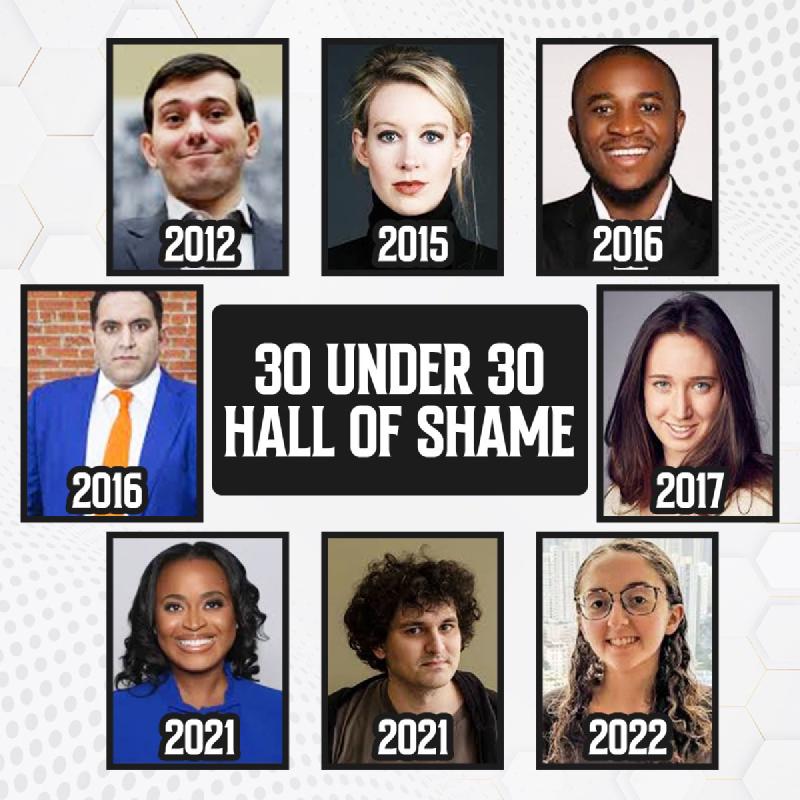
Funnily enough, the magazine Forbes illustrates both the tendency to fall for the heroic leadership archetype and the fact that the archetype is fallacious. As the Guardian points out, a lot of the leaders that they singled out as exemplary ended up behind bars (e.g. Sam Bankman-Fried, Martin Shkreli, Elizabeth Holmes, Charlie Javice, Trevor Milton, etc.), Forbes’ bad judgement in their picks became such a cultural phenomenon online that in 2025 the magazine itself spinkled their head with ashes. ↩︎
Note that whether going through with a decision from the leader will cause harm or not is irrelevant. My claim is that heroic leadership causes moral disengagement, not immoral behaviour. ↩︎
There are a lot of legitimate and good reasons why this may happen (a reorganisation in which your previous role disappears, a training programme for which you are expected to “grow into the role”, etc.), so no judgement here! ↩︎
For example, with a very junior team, you may want to simply validate a draft decision with the team, while with a very senior one you may feel confident to discuss even the underlying strategy for the decision at hand. ↩︎
I’m not saying that you shouldn’t attract the attention of the team to the fact that you “called it” but your concern was dismissed. There is probably a lot of learning to extract from reflecting in hindsight on that dynamic. But the right moment for that discussion is not when your servers crash at 1:47 am; it is during the team retro or the incident post-mortem. And the purpose of it is not berating but learning. ↩︎
It is sad having to remark on this, but do absolutely check they are into imperfection and vulnerability before providing feedback to them! Leaders who perceive themselves as superior and better than their followers will take any constructive feedback that comes with well-reasoned evidence as an attempt to corner them, and they will feel threatened/attacked and act accordingly, which can be very unpleasant if they wage power over you (e.g. if they are your manager at work). ↩︎